
Where does my trash actually go?
We all put it at the curb on trash day, the truck picks it up... and that's where most people stop thinking about it. But your trash is just getting started. Here's everything that happens next - and what it actually takes to make it happen.

image goes here
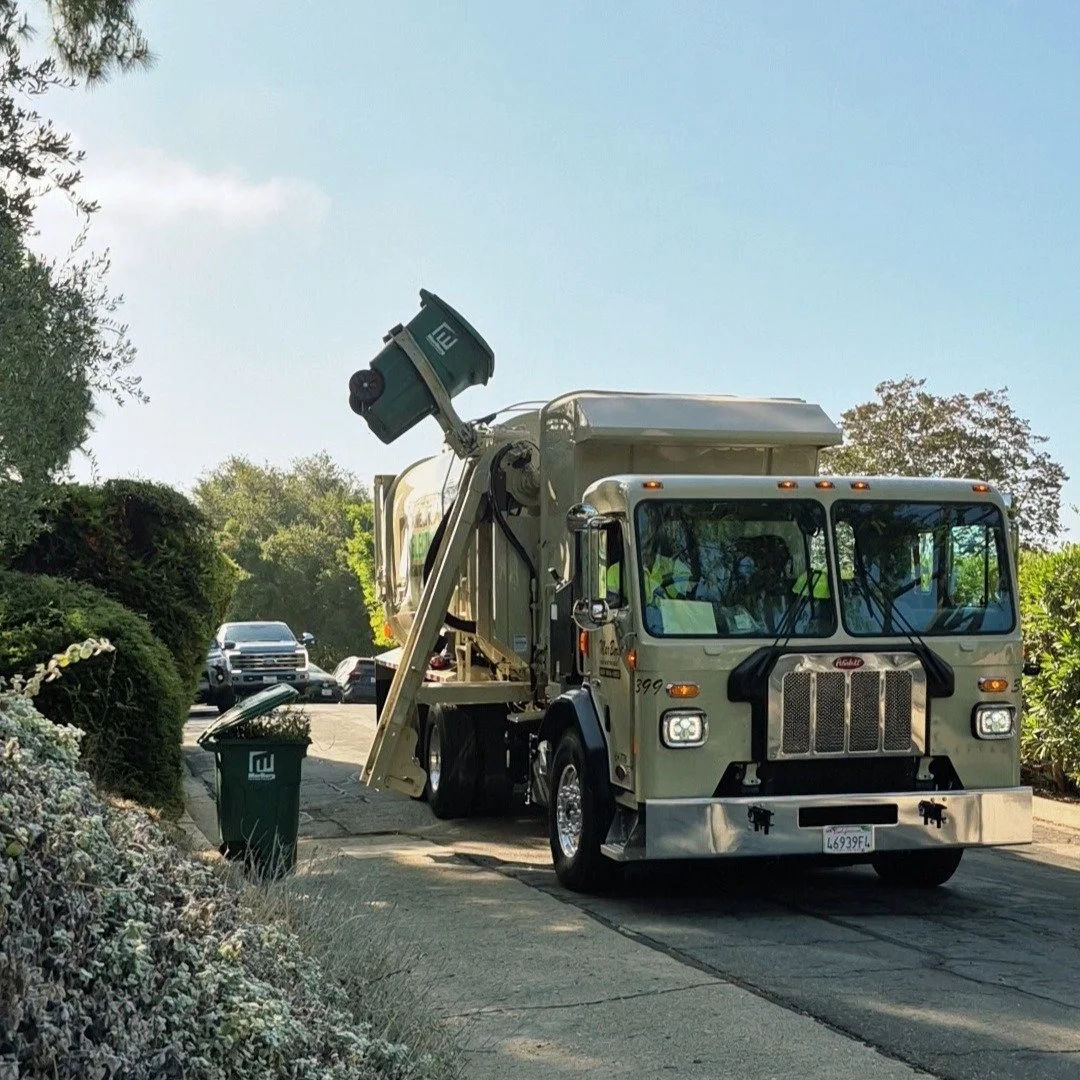
Curbside Collection
It starts at your curb
Every pickup begins with trucks specifically routed by a dispatch team, trained drivers, and tight schedules built to hit thousands of stops each day for trash, recycling and green waste.
- Routes are engineered for efficiency — sequencing stops to minimize drive time, fuel use, and truck wear
- Drivers are trained and certified on heavy equipment operation, Dept. of Transportation safety rules, and hazard recognition
- Trucks require ongoing maintenance, fuel, and compliance inspections to stay road-legal
- Weather, traffic, blocked access, and holiday schedule shifts all have to be planned around
- One missed or delayed stop can cascade into delays for the rest of the route

image goes here
Route Completion
One truck, dozens of stops
A single truck collects from hundreds of homes or businesses across a full route before it's full. Once loaded to capacity, it's time to head for the dump.
- A fully loaded truck can carry 10+ tons of waste before reaching a facility
- Drivers navigate narrow streets, low branches and wires, parked cars, and shifting neighborhood layouts daily
- Trucks compact waste in real time
- Routes must be completed in a single shift, which limits how much can physically be collected per truck
- Any breakdown mid-route means a second truck has to be dispatched to finish the job
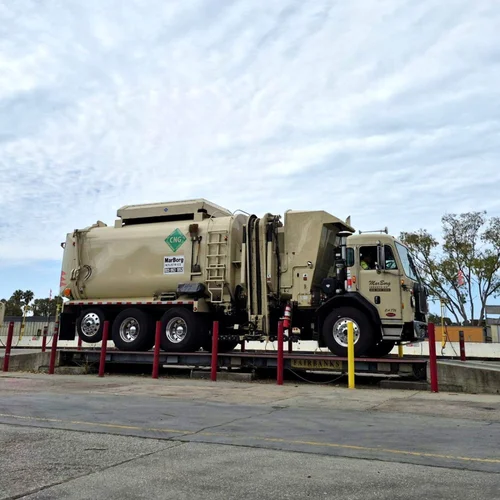
image goes here
Weigh-In
Every pound gets counted
Before anything is sorted or disposed of, each load crosses a certified scale — data that drives billing, compliance, and reporting across the entire operation.
- Certified scales record exact tonnage for every incoming load
- Weight data feeds directly into landfill tipping fees and disposal costs
- State-mandated diversion reporting (how much is recycled vs. landfilled) depends on this data being accurate
- Scale house staff log each truck, hauler, and load type for tracking and billing
- Facility scheduling depends on real-time tracking of how much volume is coming in
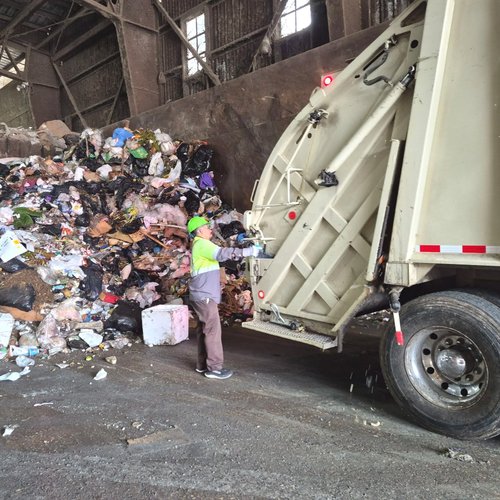
image goes here
Dumping on the Tipping Floor
Where the load hits the ground
Once weighed, the truck pulls into the facility and dumps its full load onto the tipping floor — the staging area where waste is inspected and queued before it's sorted or moved on.
- Tipping floor staff visually screen each load for hazardous, oversized, or prohibited materials before it moves further
- Floor crews and heavy equipment (loaders, skid steers) push and organize waste to keep the space clear and safe
- Timing matters — floors have limited capacity, so incoming trucks and outgoing processing have to stay in sync
- Dust, odor, and safety controls (ventilation, spotters, traffic patterns) are actively managed in this space
- This is the last point where a load can be diverted or flagged before it enters sorting or disposal
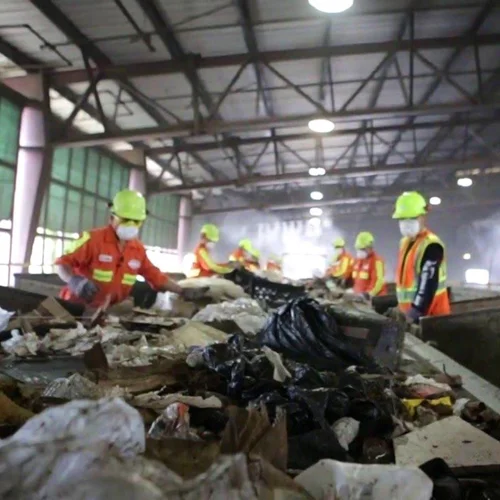
image goes here
Sorting & Processing
Sorting the mess by hand and machine
At the Materials Recovery Facility, recyclables and trash are separated using a combination of mechanical sorting and manual labor — pulling out contamination one item at a time.
- Depending on location, conveyors, screens, and magnets do the first pass of separating materials by type and size
- Contaminated recycling loads can ruin an entire batch, turning "recyclable" material into trash
- The facility runs on shift schedules, requiring staffing, safety equipment, and training
- Sorting speed and accuracy directly affect how much material can actually be recovered and sold to recoup some of the cost
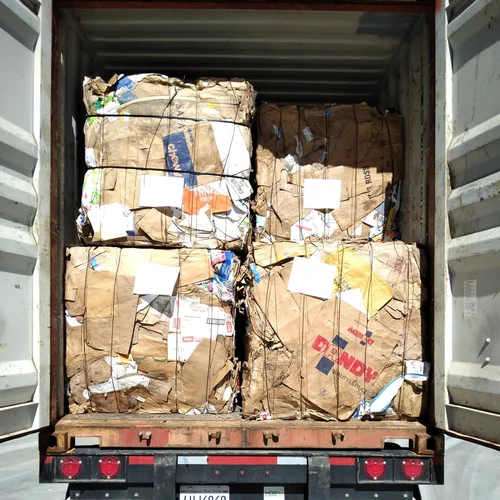
image goes here
Bailing & Sale to Market
Recycling isn't free — it's a market
Sorted recyclables are compacted into bales and sold to brokers and end buyers — but commodity prices swing constantly, and there's no guarantee the sale covers the cost of processing.
- Cardboard, plastics, metals and mixed paper are baled separately to meet buyer specifications
- Commodity prices for recyclables fluctuate based on global markets, not local effort
- Some materials cost more to sort and process than they earn when sold
- Brokers require consistent quality — inconsistent bales can be rejected or sold at a discount
- "Recycling" only generates revenue if there's a buyer willing to pay more than the processing cost
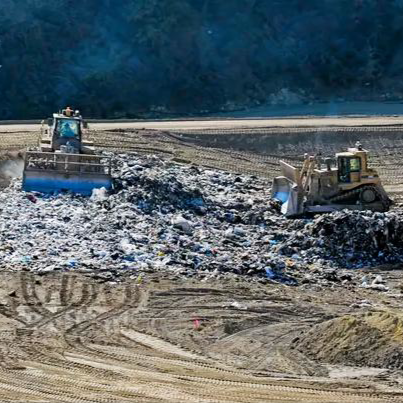
image goes here
Transfer to the Landfill
What's left has to go somewhere
Once sorting and baling are complete, true residual waste — what couldn't be recycled or diverted — is moved to the landfill for final disposal.
- Only material confirmed as non-recyclable residual waste reaches this step — everything recoverable has already been pulled out upstream
- Loads are tracked again at this point to confirm what's being landfilled versus what was diverted earlier in the process
- Equipment, scheduling, and staff time are still required to move waste efficiently from processing to final disposal
- Facility layout and proximity between processing and disposal points affects how efficiently this step runs — which factors into overall system cost
- This step connects everything upstream (sorting, baling, market sales) to final disposal — the goal is that nothing is landfilled until it's confirmed as true residual waste
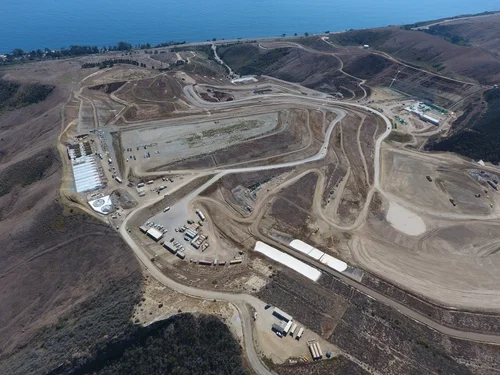
image goes here
Environmental Management
Buried, but not forgotten
At the landfill, waste is compacted, covered, and monitored for decades — with tipping fees paid per ton and strict environmental rules governing what happens long after burial.
- Tipping fees are charged per ton and are a direct, unavoidable cost passed through the system
- Landfills must capture methane gas and monitor groundwater to prevent environmental contamination
- Sites are required to meet state and federal environmental compliance standards indefinitely
- Waste is compacted and covered daily to control odor, pests, and erosion
- Landfill closure and post-closure care can continue for 30+ years after a site stops accepting waste